Building on Oregon Treasury’s 2025 Progress toward Net Zero Emissions - Part 1

February 18, 2026

Part 1: Building on Oregon State Treasury’s 2025 Progress toward Net Zero Emissions 

Divest Oregon applauds initial action, offers recommendations for future reporting, including the use of multiple metrics


To protect the Oregon Public Employee Retirement Fund (OPERF) from the financial and climate risks of the energy transition, the Oregon State Treasury is one of the few state pension funds with a strategy and commitment to reducing emissions across its portfolio. As part of this commitment, Treasury recently published its “2025 Progress Report: Tracking Net Zero and Climate Positive Investment Strategies.” Divest Oregon, a grassroots coalition representing unions, racial and climate justice groups, youth leaders, and faith communities, has previously applauded Treasury’s progress toward reducing its emissions and welcomes this report.


This progress reflects previous Treasurer Tobias Read’s commitment to Net Zero, the passage of the 2024 COAL Act and the 2025 Climate Resilience Investment Act (CRIA) as well as years of stakeholder, legislative, and coalition engagement (including with Divest Oregon). 


Part 1 of Divest Oregon’s review is below. Part 2 can be found here.


In her cover letter and public outreach for the report, Treasurer Steiner has emphasized three major “results of this strategy:”

1. A 50% drop in the “emissions intensity” in OPERF from 2022 to 2023

2. A doubling of “climate-positive” investments as of June 2025

3. A steady decline in fossil fuel private market holdings since January 2023


Divest Oregon has reviewed the report in depth, carefully analyzed these findings (read our full analysis here), and developed specific recommendations for future reporting from the Treasury. 


To understand these results, Divest Oregon took a deep dive into the numbers, asking not only “how could this happen” but also “what else can we learn about OPERF’s carbon emissions footprint?” 


A 50% Drop in Emissions Intensity?

Treasury reports a 50% drop in emissions intensity in the OPERF holdings from 2022 to 2023 (the only time period considered in emissions calculations in the report).


A 50% reduction in any emission metric would indeed be remarkable, especially during years when the EPA estimated US emissions dropped by only 4%. How could this happen? 


There are multiple ways to measure portfolio emissions in the financial world, depending on what aspect of decarbonization you are interested in.


Pension funds are interested in measuring “transition risk” — the challenge the companies they invest in face in transitioning to a renewable energy future. They measure their holdings’ “emission intensity” to evaluate the size of that “transition risk.”


The emissions intensity metric measures how much carbon a company emits relative to the company’s revenue. In this case, “revenue” refers to the total amount of money a company earns from its operations, such as selling goods or providing services, before any expenses are deducted. The more emissions per revenue, the greater likelihood of a greater “transition risk.”


Here’s the catch: Even if emissions increase, the emissions intensity number can still decrease — simply because revenues (the divisor in the calculation) increase even more, which really doesn’t change the transition risk.

That appears to be what happened between 2022 and 2023:


  • The emissions associated with OPERF investments actually increased by 28%...
  • but because the reported revenue associated with its investments increased by 195%...
  • the “emissions intensity” fell 50%
When revenue grows faster than emissions, the emissions intensity falls — 
even if the climate impact doesn’t improve.

This surge in revenues was driven mainly by one asset class: private equity – and one company within private equity.


The report states that private equity revenues associated with OPERF’s investments went from $242 Billion in 2022 to over $1 Trillion in 2023 – an $780 Billion increase making up 80% of the total revenues associated with its investments. How could that happen?


Because private equity data is confidential, Treasury relied on modeling rather than company-reported numbers. That makes the results hard to analyze. The report states that private equity’s revenue increased over fourfold from 2022 to 2023 and Treasury shared with Divest Oregon that it attributed this exceptional increase to an indirect stake in a large global technology company with low emissions.


The total 2023 revenues of this global tech company make it a significant market outlier, but there is no way for outside organizations to verify this revenue. 


If OPERF’s share of its revenue, as a partial investor, is anywhere near $780 billion, total company revenues would have been multiples of that, into the trillions of dollars. Yet, no company worldwide is reported to have made anywhere near that level of revenue in 2023, or subsequently.


Treasury based much of its 50% improvement in Emissions Intensity on this one outlier. 


The Key Net Zero Measure: “Financed Emissions”

Achieving Net Zero for OPERF’s portfolio involves tracking and cutting emissions financed by pension plan dollars until they are balanced out by assets that actively remove carbon from the atmosphere. 


Tracking progress to Net Zero depends on tracking the total amount of carbon “owned” by the portfolio’s money. The share of carbon pollution the pension fund itself is responsible for, based on the percentage of the investment it is holding, is called “financed emissions.”


Using this metric:


  • OPERF’s total financed emissions rose from 35.8 million to 46 million tons of CO₂e (CO2e is “CO2 equivalents” as defined in the Treasury’s Report)
  • That’s a 28% increase… but, again, most of this comes from one asset class: private equity
  • According to the Report, nearly half of OPERF’s financed emissions increase came from OPERF’s private equity holdings.


If we exclude the modeled private equity data, a different picture emerges. Outside of private equity, the portfolio’s climate footprint appears largely unchanged. This aligns with broader trends: U.S. emissions changed only modestly over the same period.

Multiple Metrics Tell the Whole Story

Taken together, without the private equity data, these two metrics tell a story of rising revenues during a period when emissions remained about the same. And that is the story of 2022 to 2023, years when the economy was recovering from COVID shocks and energy demand increased. 


The reduction in emissions intensity was years before Treasurer Read presented the OST Net Zero Plan and focused staff on strategies to lower the pension fund’s carbon footprint.


No single view of a complex situation is likely to be accurate. Different climate metrics tell different stories and are needed to help tell the full story:

  • Emissions Intensity (carbon per revenue) reflects transition risk of the portfolio’s holdings — and is greatly affected by swings in the economy. This is the metric the Treasury used to determine its 50% reduction from 2022 to 2023.
  • Financed Emissions (total carbon owned) reflects the portfolio’s progress toward Net Zero. Although not highlighted or discussed, this metric is also reported.
  • Financed Emissions Intensity allows internal and external comparisons based on a portfolio’s financial responsibility for emissions.


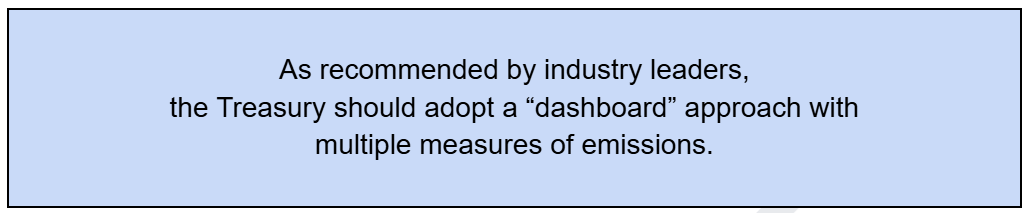
Relying on the single number of Emissions Intensity — especially one tied to economic swings — can create a misleading snapshot. Experts recommend a dashboard approach using multiple measures. 


Better transparency about data quality and assumptions — especially for private equity — would help the public understand true progress.
But, perhaps most importantly, metrics themselves are just numbers. Understanding what is happening behind the numbers, why they go up or down or stay the same, is what makes numbers a meaningful guide to achieving goals. Without context, it is impossible to know what they really mean.


A Doubling of Climate-Positive Investments

To its credit, the Treasury reports that climate-positive investments doubled between 2022 and mid-2025, in line with the Net Zero Plan’s goal of tripling these investments in real assets and private equity by 2035.

These total about $2.4 billion in Real Assets, or roughly 2.4% of the portfolio.


This increase indicates movement in the right direction, though there is room for progress. As with other metrics, context matters: California’s public pension (CalPERS) has committed to investing about 18% of its portfolio in climate solutions by 2030. OPERF should follow suit. 


Private Market Fossil Fuel Holdings: Declining — or Just Losing Value?

Treasury reports that private fossil fuel holdings have declined since 2023.


But the report only shows market value. That makes it unclear whether the fund sold or exited fossil fuel assets or if these assets simply lost value.


From this report of annual investments, there is no way to know whether the fund is truly reducing exposure. More transparency is needed.


Building on Progress for Future CRIA Reports

Divest Oregon recommends several practical improvements for the next report mandated by the CRIA legislation and due at the end of 2026. 


The Oregon State Treasury should:


Develop a dashboard that includes multiple climate emissions metrics, including financed emissions, and provide data quality scores for the calculated emissions metrics.


Include scope 3 emissions more prominently to fully reflect real portfolio emissions.


Demonstrate more transparency by   clarifying private equity assumptions (including estimates or modeling to support inclusion or exclusion of the data), defining what is considered a climate-positive investment, and providing more specificity about fossil fuel investments.


Increase insights and ambition in implementing CRIA  by: Explaining how measurement results will guide future decisions including goals and timelines; Demanding transition plans for all private market funds with fossil fuel investments - no matter the amount invested; Stating goals and timelines for emissions reductions; Striving for a higher percentage of climate positive investments; Reporting on progress towards just transition including workers’ rights and Free, Prior, and Informed Consent.


See Part 2 of this blog for a continued analysis of the NZP Report.

February 18, 2026
Part 2: Building on Oregon State Treasury’s 2025 Progress toward Net Zero Emissions Divest Oregon applauds initial action, offers recommendations for future reporting, including the use of multiple metrics
January 29, 2026
Thanks to the passage of CRIA and the Coal Act, Oregon is moving toward a more transparent assessment of climate-related risks, engaging with asset managers and companies, and identifying climate-positive investments. OPERF has nearly $90 million invested with Exxon, $40 million in Chevron, and $5 million in Shell. Can the Treasury hold these companies accountable and protect the wider portfolio from major conflict exposure? Following is incisive testimony to the January 2026 Oregon Investment Council by Andrew Bogrand, Divest Oregon’s volunteer Communications Director. For over five years, the Divest Oregon coalition has encouraged the Oregon State Treasury to take seriously the financial risks associated with fossil fuel investments, particularly within the context of the wider energy transition. Treasury, as well as the Oregon Investment Council, has listened and responded. Thanks to the 2025 Climate Resilient Investment Act (CRIA) and the 2024 Clean Oregon Asset Legislation (COAL) Act , our state is moving toward a more transparent assessment of climate-related risks, engaging with asset managers and companies, and identifying climate-positive investments. Of course, much of the work remains. In the spring of 2025, Divest Oregon provided testimony to lawmakers in Salem about the coalition’s support of CRIA. We shared how the bill would help Treasury address “new economic realities, where geopolitical contestation…and natural resource competition will upend the financial logic of passive investing.” A year later, this statement rings painfully true. We stand on the precipice of resource-driven conflicts in Venezuela, Greenland, and Iran. We are witnessing a deterioration of the international rules-based order, which will come with serious financial implications. This breakdown is not random. Chevron has played “the long game” in Venezuela, spending millions lobbying the Trump administration and positioning itself to profit following the US invasion. Shell is seeking a multi-billion gas project following the illegal ouster of President Maduro, which presumably also secured ExxonMobil’s interests – not in Venezuela, but in neighboring Guyana . And, the American Petroleum Institute, an industry lobby group including Chevron, Shell, and Exxon, recently pledged to “stabilize Iran” if the regime is ousted there, too.  Of course, whether these companies will profit from this new era of resource colonialism remains unclear. Darren Woods, the CEO of ExxonMobil, said bluntly that Venezuela is “un-investable.” Chevron has also acknowledged that any future work in Venezuela will require extensive guarantees and long-term stability, conditions which remain absent. Despite all the money spent on lobbying, the oil market remains volatile and these companies will likely seek taxpayer support and sanctions relief for risky bets abroad Treasury has nearly $90 million invested with Exxon, nearly $40 million in Chevron, and over $5 million in Shell. Now the question is how to hold these companies accountable and protect the wider portfolio from major conflict exposure. Not all energy companies are equal. In contrast to Chevron, France’s TotalEnergies, which Treasury also owns, has no intention to enter Venezuela despite its operations in nearby Suriname, presumably worried that their presence could make a humanitarian crisis worse or even directly fund human rights violations. If Treasury is serious about engagement, as set forth in CRIA, now is the time to exercise this commitment toward the most politically-exposed companies. Extraction by military force pushes the absolute boundaries of the social license to operate and undermines other holdings in Treasury’s portfolio. Companies have a major and well-recognized responsibility to avoid contributing to war. This responsibility is rooted in the UN Guiding Principles on Business and Human Rights as well as in international humanitarian law. Companies are expected to conduct rigorous human rights due diligence to ensure that their operations, supply chains, and technology do not fuel or contribute to conflict. If companies like Chevron and Exxon fail to respond to engagement along these lines then divestment is both an appropriate business decision -- and the right thing to do.
November 6, 2025
Oregon Treasury Investment Team Causes $3.7 billion loss to PERS Retirement Fund since 2023. Treasury staff disregarded policies limiting private equity investments. Overview A Divest Oregon analysis of Oregon Treasury private equity investment practices finds that years of exceeding the Oregon Investment Council’s (OIC) policy limiting high-risk private equity significantly reduced the performance of the Oregon Public Employees Retirement Fund (OPERF). These effects total about $3.7 billion in reduced value since 2023 . At the center of this issue is Oregon Treasury Chief Investment Officer Rex Kim and his investment team , whose long-term private equity acquisitions significantly exceeded OIC’s risk tolerance for OPERF as stated in its investment policy targets. The OIC is a trustee , and an agent’s failure to follow a trustee's instructions is a breach of trust . These events raise broader questions about policy oversight, internal accountability, and the Treasury’s ability to align its investment practices with new directives under the Oregon Climate Resilience Investment Act (CRIA) . Policy Departures and Oversight Challenges Since at least 2019, OPERF’s investments in private equity substantially went over the levels established in OIC’s policy targets. Corresponding reductions in lower-risk public equity went well below target. While the OIC sets investment targets, it relies on Treasury investment staff to implement them faithfully. By 2022, excessive amounts of private equity led to urgent pressure within OPERF to obtain cash for PERS benefit payments. Treasury then undertook substantial sales of public equities. During this time, the CIO argued ( audio at 1:26:40) that OIC’s private equity policy target was just “some 20 per cent artificial number” and existing overinvestments in private equities should continue. His remark highlights the continuing tension between policy set by the OIC and its implementation by Treasury leadership. Documented Financial Impact In 2025, the Oregon Journalism Project reported that Treasury’s overinvestment in private equity reduced OPERF’s exposure to better-performing public equities and caused $1.4 billion in lost value during 2024 alone. Treasury officials did not contest the reported dollar loss, although Treasurer Elizabeth Steiner noted that a single-year snapshot cannot fully capture the long-term effects of complex portfolio dynamics. Nonetheless, she acknowledged in October 2025 the need to rebalance OPERF’s exposure away from private equity toward more liquid, lower-risk assets. Broader Review by Divest Oregon Following Oregon Journalism Project reporting, Divest Oregon conducted an independent examination of Treasury’s investment return statements from January 2020 through the third quarter of 2025. Impacts were calculated by looking at investment yields as they would have been had the Treasury leadership followed OIC policy targets, and comparing them with the yields that Treasury reported. The analysis confirmed the substance of the Oregon Journalism Project’s finding of a $1.4 billion underperformance in 2024, and identified additional damage to OPERF returns totaling $2.3 billion for 2023 and 2025. Divest Oregon’s Chart 1 shows these underperformances resulted in cumulative damage of $3.7 billion to OPERF returns since 2023. Had Treasury met the OIC targets, Divest Oregon calculates that OPERF’s total returns would have increased by 1% to 1.5% annually in 2023 and 2024, improving the system’s funded ratio in 2024 by roughly 1% , from 73% to 74%.
October 21, 2025
Two new reports by Divest Oregon highlight the interdependency of lowering fossil fuel investments and a just transition to clean energy. Pension funds seeking to invest in low carbon investments to support climate health must examine the impact of proposed investments on the health and well-being of communities. The Oregon Treasury is committed, by a recently passed Oregon law , to “the goal of reducing the carbon intensity of the [Oregon Public Employees Retirement] fund through a preference for investments that reduce net greenhouse gas emission” while “investing in public equity holdings that incorporate the tenets of a just transition in their overall priorities and portfolio.” Pension fund investments that do not support a just transition present a financial risk to investors. As a United Nations International Labour Organization report explains: A failure to promote a just transition represents a threat to effective climate action, and can contribute to increased inequality and fuel social unrest. This, in turn, can lead to major financial implications for banks and insurance companies as social instability, transition risks and physical climate change impacts may disrupt clients’ business operations due to interruptions in their supply chains, impacts on human health, or loss of livelihoods. In its report, Oregon Treasury’s Investment Screening Failures , Divest Oregon finds that Oregon Treasury’s failure to screen its investments results in investments that worsen the climate crisis, violate people’s rights, cause injury, and cause negative consequences to the Oregon Treasury and its holdings. The report offers examples of the interdependence of climate and investment results. One notable example is the Rio Grande Liquid Natural Gas (LNG) Export Terminal. In December of 2022, OST committed $350 million to GIP Fund V for the project. The 900-acre project was sited on sacred tribal lands without free, prior and informed consent (FPIC) in the face of strong and broad community and global opposition. Construction and operation of the terminal promised to devastate the last deepwater port in the Gulf without fossil fuel projects, and destroy key components of the local community and economy. The risks were financial as well as environmental. Multiple banks and insurers had already withdrawn their support when the Oregon Treasury chose to invest. The project had no FERC permit and was in litigation. GIP’s two previous funds had a history of underperformance. There were numerous indicators that the LNG market would be glutted by the time this project came online. A July 31, 2025 decision by FERC gave a green light to the project. As of September 2025, the earliest projected completion date is 2030. Pipeline and export terminal infrastructure is designed to last for decades with obvious repercussions for the climate and the community. Opposition to the project continues. Divest Oregon’s Just Transition and the Oregon State Treasury report describes the financial benefit to pension funds of investments that promote a just transition to clean energy. Citing the guide for investor action from the Investing in a Just Transition Initiative and United Nations’ Principles for Responsible Investment (UNPRI), it notes 5 reasons why investing in a just transition is in the best interest of beneficiaries and in line with fiduciary duties by: Responding to systemic risks Reinvigorating fiduciary duty Recognizing material value drivers Uncovering investment opportunities Contributing to societal goals The report presents recommendations for a just energy transition for public pension funds. It calls for pension funds to establish investment policies regarding Free, Prior and Informed Consent (FPIC) and Fair Labor Rights and provides a detailed explanation of these principles and their relationship to the financial health of pension funds. Citing examples of pension funds that have successfully utilized the principles of just transition like NYSERS and CalPERS, the report provides a guide for pension funds to adopt ethical and beneficial investment strategies.
October 21, 2025
Portland, OR - The Oregon Treasury’s Investment Screening Failures report revisits emblematic fossil fuel projects that the coalition identified as “investment failures” in 2023. These projects worsen the climate crisis, cause harm to communities and the environment, and result in negative economic consequences to state employees’ retirement savings that the Oregon Treasury manages. Treasury is invested in these projects either directly through a private equity fund or indirectly through stock ownership. The report argues that the Treasury must urgently adopt more rigorous screening mechanisms to better protect Oregon’s Public Employee Retirement System (PERS) and help advance a more just energy transition .  “The core question of the report is: Do fund beneficiaries want their retirement money to fund the climate crisis, community destruction and human rights violations?,” said Jenifer Schramm, co-lead of Divest Oregon and the report’s author. “And, are the beneficiaries aware of the financial risk of these investments? Is the Oregon State Treasury aware of the risks?” In the fall of 2022, the Treasurer pledged a climate focus in the portfolio. A short while later, the Treasury invested hundreds of millions in a private fund dedicated to construction of a massive liquid natural gas terminal on the Texas Gulf Coast. This financially problematic investment raises the question of the Treasury’s investment selection process. The report argues that better screening, more transparency, and less reliance on notoriously secretive private investments would reduce the harm, increase trust among fund beneficiaries, and ultimately produce better returns. “The Investment Screening Failures report challenges the Oregon Treasury to tell the beneficiaries of the fund it manages how investments are chosen and what their retirement funds are supporting,” said Richard Brooks, Climate Finance Program Director of Stand.Earth. “The first Failures report graphically illustrated the fossil fuel industry’s disregard for Indigenous rights and labor rights; its destruction of climate and communities. Two years later the profiled investments look no better – and the Treasury continues to invest in the fossil fuel industry. We’ll be watching to see if the Treasury follows the report recommendations and updates its investment screening and oversight.”
October 21, 2025
Portland, OR - Following the recent passage of the Climate Resilience Investment Act ( CRIA - HB2081) requiring that Oregon follow a “just transition” for investments in public markets, a new report from Divest Oregon – Just Transition and the Oregon State Treasury – outlines the urgent need and a framework for the Treasury to support a just transition to clean energy. According to the Oregon Just Transition Alliance , a nonprofit coalition of rural, coastal, and urban communities, a just transition is “about moving from a harmful, extractive economy to one that gives more than it takes, heals more than it harms, and allows people and the land to thrive.” The new report from Divest Oregon highlights key considerations as Oregon invests in a clean-energy future, including how the Oregon State Treasury can advance labor rights and the right to free, prior, and informed consent (FPIC) for Indigenous communities. The report offers a wide range of actions that other pension funds are already implementing to safeguard the long-term sustainability of their investments while providing ways to evaluate similar efforts at the Treasury. “Advancing a just energy transition is not only a moral obligation to frontline communities impacted by Oregon’s investments, but now a legal requirement that is backed by sound financial guidance,” said Rory Cowal, lead author of the report and Divest Oregon member. “We hope that this new report will offer initial guidance for the Treasury as they create a roadmap to implement their own ‘just transition’ framework.” The report outlines the financial benefits to pension funds that promote a just transition toward clean energy, citing the guide for investor action from the Investing in a Just Transition Initiative and United Nations’ Principles for Responsible Investment (UNPRI). Pension funds that utilize these frameworks can more effectively respond to systemic risks, uncover unseen investment opportunities, and contribute to societal goals that enhance the health of the wider portfolio. While the Oregon State Treasury has emerged as an early adopter of this just transition framework, other pension funds have already successfully utilized just transition principles, including the New York State Common Retirement Fund (NYSCRF) and the California Public Employees' Retirement System (CalPERS). “Oregon Treasury’s commitment to advancing a just transition puts it in line with national and international leaders,” said Susan Palmiter, co-lead of Divest Oregon. “We hope that this report supports Treasury leadership as they take the critical steps to support a clean energy transition in a way that not only complies with the law but allows Oregonians to more fully benefit from climate-safe, rights respecting investments.”
September 9, 2025
To respond to a news release by the Treasury that their most recent quarterly returns have been excellent, Divest Oregon publishes this set of charts that focus on the following statements and question: Private equity hasn’t delivered superior performance over the long term to OPERF Treasury staff disregarded OIC private equity policy and invested too heavily for many years OPERF allocations to all forms of high-risk opaque private investments are out of step with peers Can an unreformed Treasury culture be relied on to implement Net Zero policy? A statutorily required OIC complete investment program audit is five years overdue Divest Oregon looks forward to a public statement from the Treasury that addresses these issues and questions.
September 4, 2025
At the September 3rd Oregon Investment Council (OIC) meeting, Divest Oregon members made strong statements about the need to curb private investments. Risky, illiquid, high-fees and low-returns investments obscure a lot of the emissions that PERS is funding - and are difficult to divest in times when the need to be nimble is more critical than ever. You can read some of the testimony about not following allocation policy financial and climate risk promises by the Treasurer stewardship concerns AFT-Oregon’s Harper Haverkamp spoke of concerns of 17,000 members that are reflected in the recent AFT/AAUP National report . This report calls out pension funds’ private investments as antithetical to AFT’s values. Nichole Heil, from Private Equity Stakeholder Project , traveled from California to speak about the climate devastation and financial risk of two private investments made by the Oregon Treasury. More media coverage is showing up around the state about private investments at the Oregon Treasury. See the September 2 article from Willamette Week and the Oregon Journalism Project entitled, “More Questions Arise About State Investments in Private Equity.”
old adding machine
August 25, 2025
Treasury’s Love Affair with Private Investments Doesn’t Add Up  Two recent, major investigations by The Oregonian and the Oregon Journalism Project in Willamette Week and statewide local newspapers, recently detailed significant problems with the Oregon State Treasury’s private equity overexposure for PERS. Following these publications, Divest Oregon has received questions about the information and risks of this exposure, which our coalition has tracked with concern for years. In this memo, we provide answers. By standard financial yardsticks, Treasury’s private equity investments in the past 13 years routinely underperformed the benchmark long established by the Oregon Investment Council (OIC). They regularly underperformed the broad US stock market. They have not provided exceptional returns. Simply put, Treasury’s love affair with private equity no longer adds up. OPERF’s 10-year rolling average private equity returns are substantially below OIC’s benchmark OIC Investment Policy 1203 (at p.11) says that OPERF's private equity allocation is managed to produce net excess returns “over very long time horizons, typically rolling, consecutive 10-year periods” (emphasis added). Below are the 1, 3, 5 and 10-year third-quarter private equity rolling returns Treasury presented to the OIC at its 1-22-2025 meeting , at p.59. All OPERF 1, 3, 5 and 10-year rolling returns are below OIC’s benchmark (Russell 3000 stock index + 3%) by substantial amounts, though Treasury's website at p.9 says 1-year stated returns are not meaningful.
August 19, 2025
Open Letter to Treasurer Steiner and members of the OIC: Recent reporting in The Oregonian , Willamette Week and OPB’s Think Out Loud have highlighted concerns about OPERF’s investments in private equity, including acknowledgement by Treasury that OPERF’s 20-year average return for that asset class is 33% below its market outperformance benchmark. According to those reports, this has resulted in significant investment losses that would not have occurred had OST balanced its portfolio following allocation targets set by the OIC. These losses have subsequently increased the tax burden of public employers, such as schools —schools that have now had to lay off teachers. This has meant that the $500 million increased school funding approved by the legislature in 2025 must be used to pay for increased PERS contributions, rather than being used to improve student outcomes as illustrated below. On the heels of these reports in the local media, the American Federation of Teachers (AFT), the American Association of University Professors, and Americans for Financial Reform released a report, From Public Pensions to Private Fortunes: How Working People’s Retirements Line Billionaire Pockets (July 30, 2025). The report summarizes in a solid, documented, and readable manner the many studies showing how private equity and related forms of private investment no longer deliver superior returns, particularly on a risk-adjusted basis, along with concerns about workforce management practices. The response from OST has been less than informative, with simple references to the need to invest “on a 40 year horizon,” which does not answer the critiques from investment experts quoted in the articles or noted in the above articles and report. It is time for OST leaders to explain to beneficiaries and the public in detail the rationale behind their unusual strategy, including: ● Given the uncertainties of our current economic situation, why do they think private investments will outperform others? ● What data are they using to support this view? ● What guidance are they being given, by whom, to follow this path? ● Given their reference to positive private investment performance in the past, aren't they simply “driving with the rear-view mirror?” It would appear from recent news reports that OST is taking undue risks with beneficiaries' pensions. It is time for OST to answer the criticisms raised. For your reference, we have attached a more detailed letter regarding the major issues raised and a list of questions posed by these news articles and reports. We look forward to your response. Sincerely, AAUP-Oregon AFT-Oregon Senator Jeff Golden Senator Khanh Pham Senator James Manning Representative Farrah Chaichi Representative Lisa Fragala Representative Mark Gamba Divest Oregon Coalition Attached below: Illustration of losses to Oregon school from the Willamette Week article.